
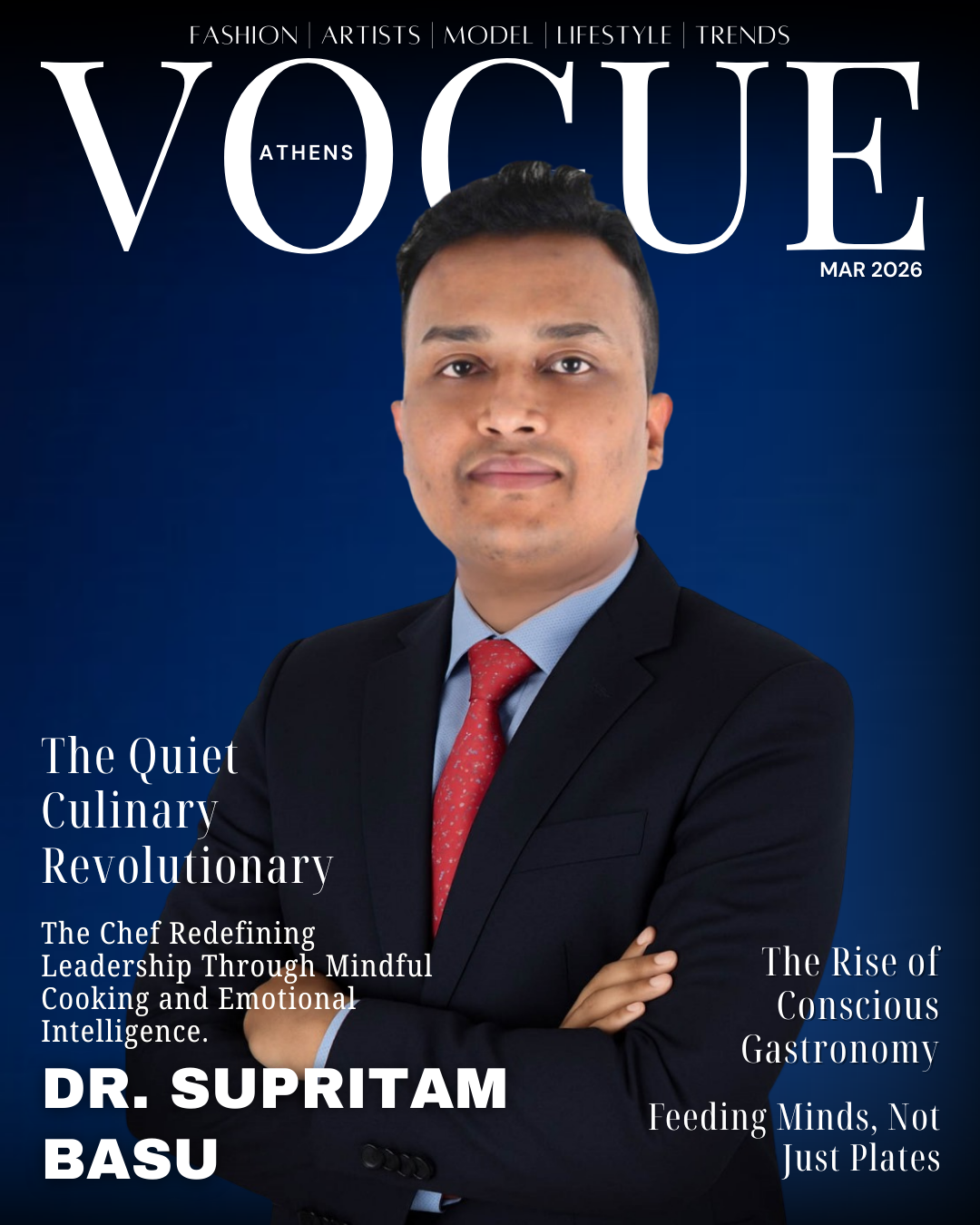
Dr. Supritam Basu belongs firmly in the second category.
In 2025, he stands at a rare intersection — Doctor, Chef, Philosopher, and Author — shaping a multidimensional vision of food that extends far beyond the plate. Currently serving at Sheraton Grand Dubai, he operates not only within a globally respected hospitality institution, but also within a much larger intellectual and philosophical framework.
At a time when the global culinary scene celebrates spectacle — smoke, tweezers, dramatic reveals, and relentless reinvention — Dr. Basu’s work feels almost radical in its restraint. He is not driven by virality. He does not pursue theatrical plating engineered for digital applause. Instead, he is engaged in something quieter and arguably more transformative: reshaping the inner architecture of kitchens and redefining the emotional blueprint of those who cook within them.
As 2025 unfolds, his philosophy resonates with a world increasingly fatigued by excess. People are seeking substance over showmanship, clarity over chaos, and depth over speed. In this climate, Dr. Basu’s approach to food feels less like a trend and more like a recalibration.
Cooking as a Transfer of State
For Dr. Basu, cuisine begins long before ingredients meet heat.
As a PhD scholar researching the relationship between gastronomy, sustainability, and human philosophy, he proposes an idea that challenges conventional culinary thinking: food absorbs the psychological state of the person preparing it.
A distracted cook produces distracted food.
An agitated mind transfers tension.
A centered presence communicates calm.
This is not mysticism. It is awareness.
Under his lens, cooking becomes a transfer of state. The chef’s internal environment shapes the external result. Flavor, technique, and aesthetics remain important — but they are vehicles, not the destination.
In his kitchens at Sheraton Grand Dubai, the ultimate metric is not whether a dish photographs well. It is whether it leaves a meaningful aftertaste — emotionally as much as physically.
Does the meal create grounding?
Does it restore energy?
Does it make someone feel considered?
If food can influence mood, then the chef carries responsibility beyond taste.
The Academic Foundation Behind the Flame
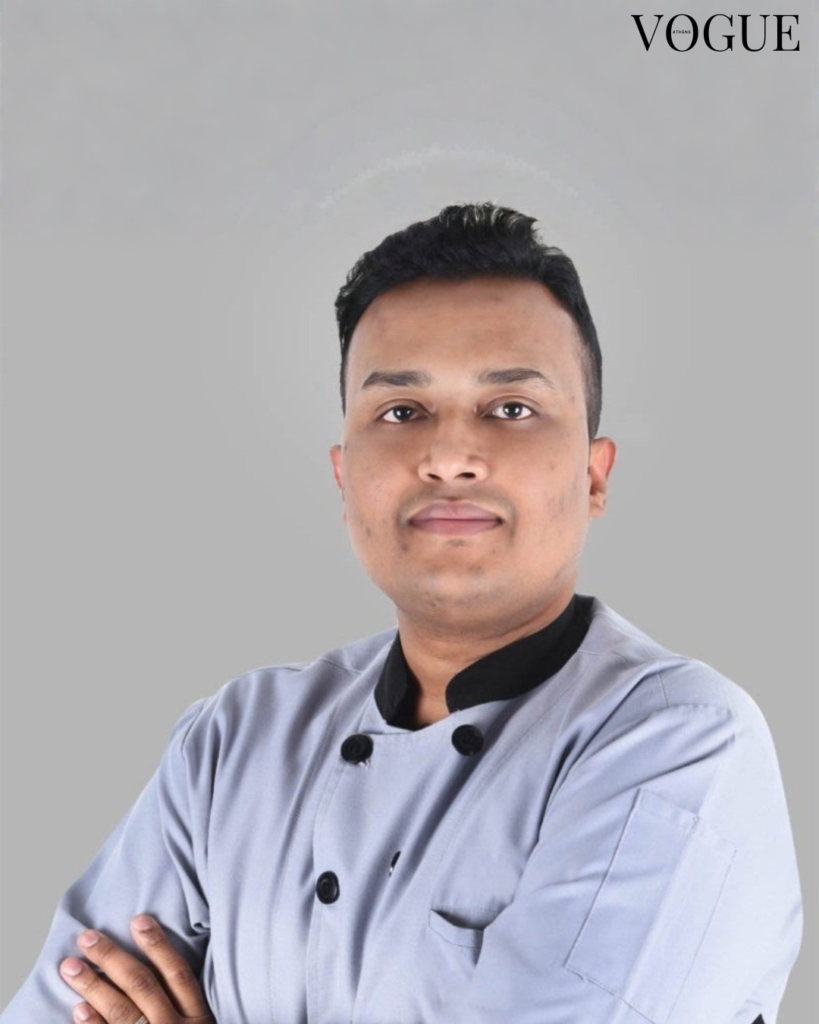
Unlike many culinary leaders, Dr. Basu’s philosophy is not solely experiential — it is research-driven.
His doctoral exploration examines how gastronomy intersects with sustainability, cultural memory, and human behavior. He studies food not only as nourishment, but as a social, psychological, and philosophical system.
How does mindful cooking impact emotional well-being?
Can sustainable practices reshape not only ecosystems but also human consciousness?
What role does cultural food memory play in identity formation?
These questions guide both his scholarship and his daily practice.
This dual path — academia and professional kitchen leadership — allows him to test theory against reality. His kitchen becomes a living laboratory where philosophy meets flame.
From Jodhpur to the World
Born on May 6, 1991, in Jodhpur, Rajasthan, Dr. Basu grew up in an Indian Army household where discipline was rhythm, not restriction.
From his father, he learned that authority does not need volume. Leadership could be firm without forceful.
From his grandmother, he learned something subtler: presence.
He watched her cook in silence — no rush, no spectacle. Ingredients were handled with respect. Time was not fought; it was honored.
Those early observations became the philosophical seed of his life’s work: food is not performance. It is attention.
A Global Education in Human Behavior
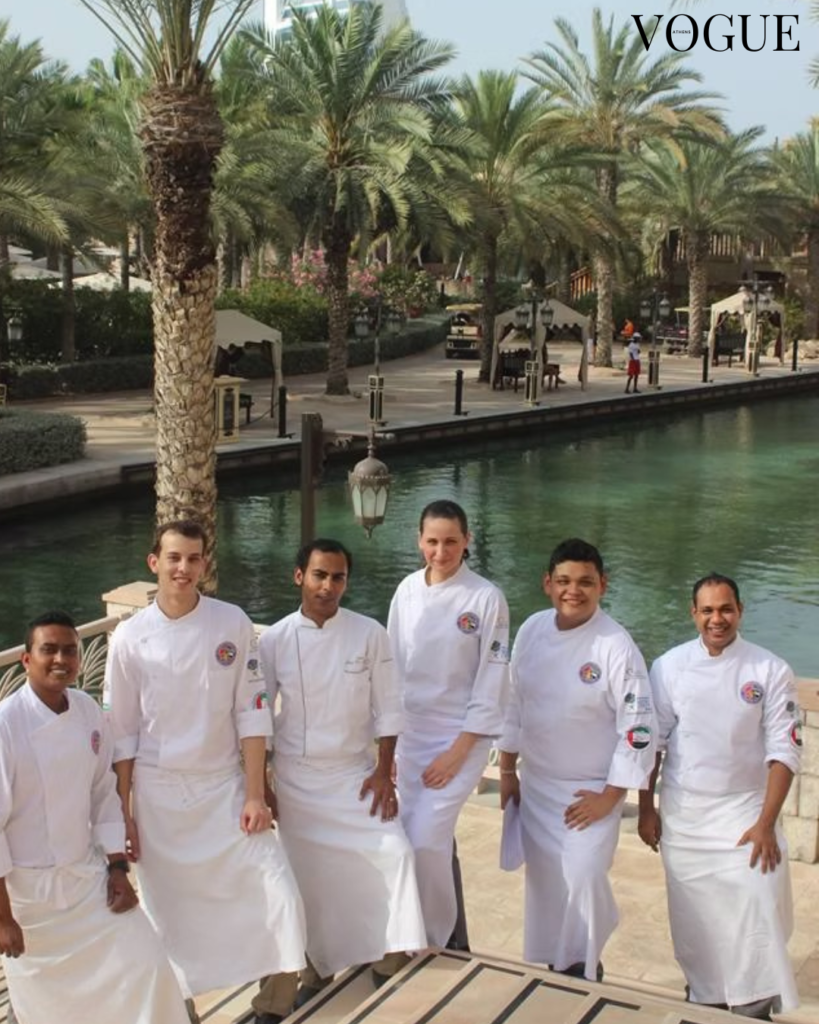
Dr. Basu’s professional journey spans Korea, Qatar, Oman, Singapore, South Africa, and the UAE.
Each country refined his understanding of cuisine as human language:
- In Korea, discipline became devotion.
- In the Middle East, hospitality was honor.
- In Singapore, systems met precision.
- In South Africa, food carried resilience and collective memory.
Across cultures, one truth remained constant:
Ingredients vary. Intention does not.
People eat for belonging.
They gather for connection.
They cook to care.
This realization deepened his empathy rather than his ego.
Dismantling Fear-Based Kitchens
Professional kitchens have long been associated with pressure and hierarchy. Raised voices were normalized. Stress was glorified.
Dr. Basu rejects this model.
In his leadership approach:
- Discipline exists — without humiliation.
- Standards are exacting — without volatility.
- Accountability is firm — without emotional erosion.
Before service, teams pause. A shared moment of silence resets attention. It is not symbolic; it is strategic.
He believes creativity cannot thrive in fear. Innovation demands psychological safety.
Leadership, in his philosophy, is not dominance. It is environmental design.
Writing Beyond Recipes
Parallel to his culinary leadership, Dr. Basu has established himself as an author exploring the intersection of food, culture, mindfulness, and personal evolution.
His books do not simply teach cooking techniques. They examine:
- The psychology of uncertainty
- The discipline of awareness
- Cultural heritage preservation
- The philosophical dimensions of nourishment
For him, writing extends the same principle found in cooking: intention matters.
Food nourishes physically.
Words nourish intellectually.
Both require sincerity.
Mentorship Through SupritamOne
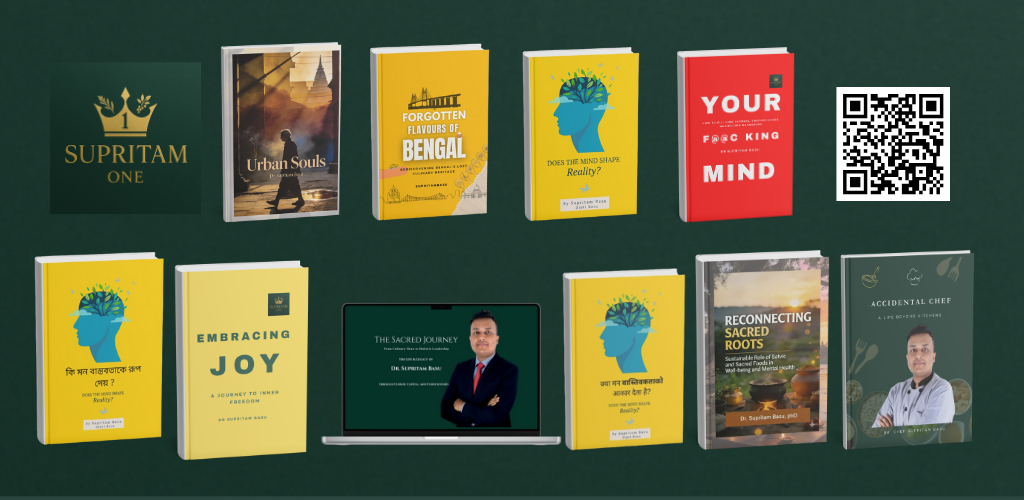
Through his initiative, SupritamOne, Dr. Basu mentors emerging professionals navigating an accelerated and comparison-driven era.
His guidance emphasizes:
- Steadiness over speed
- Ethics over ambition alone
- Self-awareness over ego
- Sustainability in career and consciousness
He prepares chefs not just for employment — but for endurance.
The Future of Food
Looking ahead, Dr. Basu envisions a culinary world where sustainability, cultural literacy, and emotional intelligence converge.
Technology will evolve. Techniques will modernize.
But without intention, progress becomes hollow.
He believes future chefs must become custodians of memory and stewards of well-being. They must understand psychology alongside plating. Philosophy alongside flavor.
Food, in his vision, is not spectacle.
It is care translated into action.
Why His Work Matters in 2025
In an era defined by speed, noise, and visibility, Dr. Supritam Basu offers composure.
He demonstrates that stillness can coexist with excellence. That leadership can be disciplined without harshness. That innovation can emerge from clarity.
He is not redesigning cuisine through disruption.
He is redesigning it through intention.
One kitchen at a time.
One research insight at a time.
One mentee at a time.
And perhaps that is precisely what the future of food requires.