
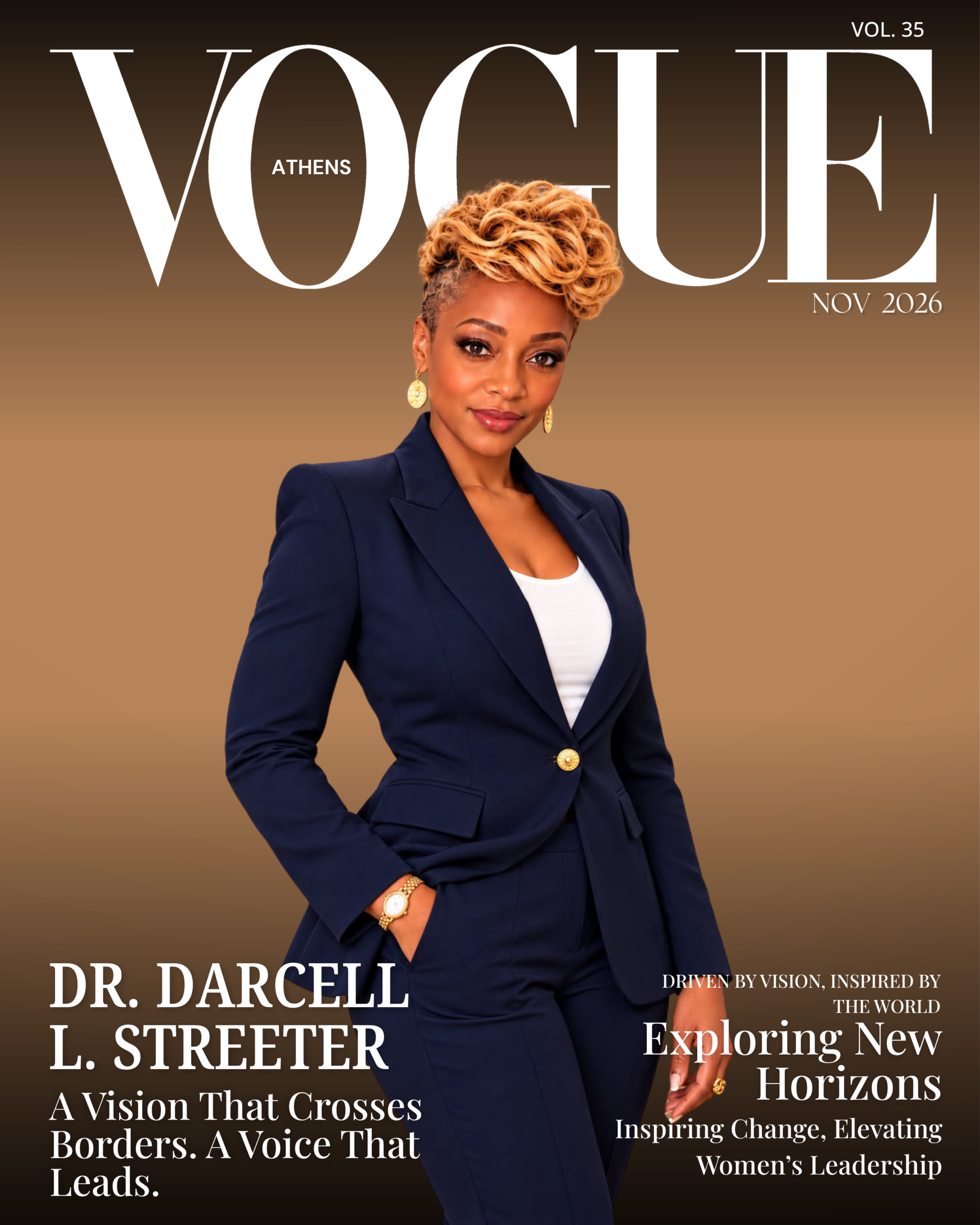
A Vision That Places People at the Center of Progress
For some leaders, success is defined by the positions they hold or the milestones they achieve. For others, its meaning is found in the lives they influence and the opportunities they create. Dr. Darcell L. Streeter belongs to the latter. As CEO of Women’s Circle, Inc. and Founder of B.HER Global™, she has dedicated her professional journey to helping women discover their capabilities, encouraging inclusive approaches to education, and developing initiatives that make personal and collective advancement more attainable.
Her philosophy is rooted in the belief that people should have the freedom to determine their own futures without being restricted by social expectations, past experiences, or institutional barriers. This belief has guided her efforts to connect individual development with broader organizational and educational change.
Rather than viewing empowerment as a temporary experience built around encouragement, Dr. Streeter approaches it as a continuous process. It involves creating the right conditions for individuals to develop confidence, acquire knowledge, exercise independence, and participate meaningfully in their communities.
Her work brings together faith, education, human services, and organizational leadership. These different influences have shaped a distinctive perspective in which progress is not measured exclusively by personal achievement but also by the ability to make opportunity more accessible to others.
At the heart of her mission is a question that continues to influence her work: What could individuals accomplish if the systems around them were designed to recognize their abilities instead of reinforcing their limitations?
The Early Influences Behind Her Leadership Philosophy
Growing Through Faith, Education, and Responsibility
Dr. Streeter’s understanding of leadership developed through a combination of family influences, academic exploration, and personal experiences. Her early environment introduced her to the importance of serving others and recognizing responsibilities that extend beyond individual interests.
Her studies in Biblical Studies helped establish a strong foundation in spiritual principles, ethical behavior, and the relationship between personal values and everyday decisions. These lessons influenced her understanding of leadership as a responsibility that requires integrity, compassion, and accountability.
Her subsequent graduate education in Human Services introduced another important dimension to her perspective. It expanded her understanding of the circumstances that affect individuals and the role that communities and institutions play in shaping their opportunities.
Through this academic foundation, she developed an appreciation for the relationship between personal circumstances and wider social conditions. She understood that people may have the determination to improve their lives while facing environments that make progress unnecessarily difficult.
This realization influenced the way she began approaching leadership. Encouraging individuals is important, but encouragement alone cannot resolve every obstacle. People also need access to supportive environments, practical resources, and systems that recognize their capabilities.
The combination of spiritual understanding and human-centered education helped establish the principles that continue to inform her professional decisions.
Childhood Transitions That Expanded Her Outlook

Her childhood also introduced her to different cultural environments and perspectives.
When Dr. Streeter was nine years old, her mother moved the family from Birmingham, Alabama, to Seattle, Washington. This transition exposed her to different community experiences and ways of understanding identity, belonging, and social opportunity.
Experiencing life in two distinct regions encouraged her to appreciate that people’s perspectives are often influenced by their surroundings. What may be considered normal in one community can be understood very differently in another.
Her mother’s influence remained particularly important during this period. Through her faith and personal example, she demonstrated how strong values could provide stability even when circumstances changed.
At sixteen, Dr. Streeter returned to Alabama and began living with her father. His emphasis on discipline, responsibility, and accountability contributed to her developing outlook.
These experiences gave her two complementary lessons: personal convictions provide direction, while responsibility determines how those convictions are translated into action.
Over time, these lessons became important elements of her approach to working with people from different backgrounds and circumstances.
The Moment That Strengthened Her Determination to Challenge Inequality
Refusing to Accept Someone Else’s Definition of Her Future
One experience from Dr. Streeter’s teenage years would leave a particularly lasting impression on her understanding of education and equality.
At sixteen, she encountered an administrator who told her that Black people did not need an education. The statement exposed an attitude that attempted to associate educational opportunity with racial identity rather than individual ability and ambition.
For a young person developing her understanding of the world, such an experience could have created significant doubt. Instead, it became an important part of the perspective she would later bring to her leadership work.
The encounter revealed how institutional attitudes can influence the expectations people develop about themselves. When individuals repeatedly receive messages suggesting that their ambitions are unrealistic or that opportunities are not meant for them, those messages can become deeply damaging.
Dr. Streeter came to recognize that one of the greatest challenges facing individuals is not always a lack of ability. Sometimes it is the presence of external narratives that encourage them to underestimate what they can accomplish.
Her response was to reject the idea that another person’s prejudice could determine her future.
She developed a stronger conviction that education, respect, and opportunity should never be treated as privileges reserved for particular groups. Human dignity is not something that must be earned through recognition or approval.
Making Empowerment a Shared Mission

As she reflected on this experience throughout her life, Dr. Streeter’s understanding of empowerment became increasingly connected to collective progress.
She recognized that people need more than occasional reminders of their abilities. They need opportunities to reconsider the beliefs they have developed about themselves and environments that encourage them to pursue meaningful change.
This perspective became particularly important in her work with women.
Her approach emphasizes helping individuals move beyond limiting assumptions, understand their personal strengths, and make decisions based on their own values rather than expectations imposed by others.
The wider impact of this philosophy is significant. When women gain a stronger sense of direction and confidence, they can bring those qualities into their families, professional relationships, and communities.
Her commitment therefore goes beyond addressing individual experiences. It focuses on creating opportunities for people to participate in changing the environments that influence their lives.
BECOMING HER™: Helping Women Redefine Their Personal Journeys
A Methodology Designed Around Lasting Development
One of the defining elements of Dr. Streeter’s work is BECOMING HER™, an eight-step personal development methodology centered on healing, self-understanding, identity alignment, and leadership.
The framework reflects her belief that personal growth should be approached with intention rather than treated as a spontaneous process.
People carry experiences that influence how they view themselves, how they respond to challenges, and what they believe they can achieve. Meaningful development requires an opportunity to examine those experiences and make conscious decisions about what comes next.
BECOMING HER™ provides a structured approach to this process.
Its emphasis on healing encourages individuals to recognize how earlier experiences may influence their present circumstances. Its focus on identity alignment invites them to examine their values, priorities, and personal direction. Its leadership component encourages them to apply their developing understanding through their decisions and interactions with others.
The methodology is built around the idea that transformation should result in greater independence.
Rather than making individuals dependent on continuous external encouragement, the objective is to help them develop the awareness and practical capabilities necessary to continue progressing.
Through this framework, Dr. Streeter connects personal reflection with purposeful development, encouraging women to become more intentional about the lives they are building.
Extending Women’s Opportunities Through B.HER Global™
Her leadership at B.HER Global™ represents another expression of this commitment.
The initiative reflects an approach to women’s empowerment that goes beyond identifying challenges. It emphasizes developing the capabilities, resources, and supportive connections that allow women to take a more active role in their futures.
Dr. Streeter believes that women should have opportunities to make independent choices, contribute their perspectives, and participate in leadership at different levels of society.
This perspective also challenges traditional assumptions about authority. Leadership is not necessarily determined by a person’s job title, financial position, or public recognition.
It can be demonstrated through responsible decision-making, service, mentorship, and the willingness to contribute to positive change.
By encouraging women to recognize their influence, B.HER Global™ forms part of a broader vision in which personal development becomes a foundation for professional participation and community leadership.
Circle Forward: An Alternative Perspective on Learning and Development
Bringing Generations Together Through Education
Education is another major area in which Dr. Streeter is pursuing her vision of long-term social progress.
Through Women’s Circle, Inc., she is developing Circle Forward: The Global Life and Learning Hub, an educational concept that seeks to bring together different generations, learning needs, and practical experiences.
The proposed initiative introduces a multilingual and multigenerational micro-school model. Instead of separating education into rigid age-based categories, it envisions a shared learning environment in which young people and adults can benefit from different forms of knowledge.
Its proposed curriculum includes STEAM education, vocational preparation, and life skills.
This combination reflects the changing demands of contemporary society. Traditional academic subjects remain essential, but individuals also need practical abilities, communication skills, problem-solving capabilities, and the flexibility to adapt to changing professional environments.
Another important feature of the concept is its recognition of cultural diversity.
Learners come from different communities and bring their own languages, traditions, experiences, and perspectives. Circle Forward seeks to create an educational environment in which these differences are acknowledged and incorporated into the learning experience.
Its intergenerational approach offers an additional opportunity for collaboration. Younger participants can share their familiarity with emerging technologies and contemporary ideas, while older individuals can contribute professional knowledge, practical experience, and lessons developed through years of participation in society.
The result is a vision of education in which learning becomes a shared responsibility rather than a one-directional process.
Developing an Educational Ecosystem for the Future
The proposed Circle Forward model also incorporates technological and organizational components intended to support its wider implementation.
Among its planned elements are a dedicated digital operating system, a micro-credentialing framework, regional learning centers, and a train-the-trainer structure.
The digital platform is intended to provide infrastructure for coordinating educational activities and supporting learning delivery.
The micro-credentialing component aims to recognize individual skills and specific learning achievements. This approach could offer participants additional ways to demonstrate their capabilities beyond traditional academic qualifications.
Regional centers are envisioned as local access points through which the initiative can connect with different communities.
Meanwhile, the train-the-trainer model is designed to prepare individuals who can facilitate learning and help extend the educational approach to additional locations.
Together, these elements form an interconnected model in which knowledge can be developed, recognized, shared, and adapted.
Its underlying philosophy is that education should not end when a person completes a formal qualification. Learning should remain accessible throughout life and should connect directly with the practical challenges people encounter.
Turning this concept into an effective educational network will require resources, institutional collaboration, appropriate evaluation, and careful adaptation to local requirements.
Nevertheless, Circle Forward establishes an ambitious direction for educational development: one in which technology supports human interaction, different generations learn together, and cultural diversity becomes part of the educational foundation.
PAWS System™: Bringing Greater Intention to Leadership Decisions
A Four-Part Framework for Navigating Challenges

Dr. Streeter’s work also addresses the importance of making thoughtful decisions when circumstances become complicated.
Her PAWS System™, built around the stages Pause, Assess, Witness, and Shift, offers a framework for approaching challenges with greater awareness and purpose.
The first stage, Pause, encourages leaders to interrupt immediate reactions. Creating a moment of distance from a difficult situation can help prevent decisions driven entirely by frustration, pressure, or uncertainty.
The second stage, Assess, focuses on examining the circumstances in greater detail. It involves understanding the people affected, identifying the forces influencing the situation, and considering the possible outcomes of different responses.
The third stage, Witness, places importance on observation and listening. Leaders are encouraged to understand what is happening without allowing assumptions to determine their conclusions. This includes paying attention to the experiences of individuals whose perspectives may not always be represented in formal decision-making.
The final stage, Shift, moves the process toward meaningful change. Once the situation has been examined, leaders identify the necessary adjustments and take deliberate steps toward addressing the challenge.
The four stages create a practical sequence that connects awareness with action.
Rather than treating leadership as a continuous series of immediate reactions, the framework encourages a more considered approach to responsibility and decision-making.
The Values That Shape Her Professional Conduct
Alongside the PAWS System™, Dr. Streeter emphasizes four values that influence her leadership philosophy.
- Respect for Human Dignity: Every individual deserves to be treated with respect, regardless of background, circumstances, or professional position.
- Personal and Organizational Responsibility: Meaningful leadership requires taking ownership of decisions and accepting their consequences.
- Awareness of Cultural Differences: Effective engagement requires understanding the experiences, traditions, and perspectives of different communities.
- Commitment to Service: Leadership should create value for others rather than becoming an instrument of personal recognition.
Her experience as an ordained minister further informs this approach.
She understands leadership as a form of stewardship in which influence comes with obligations. Those entrusted with responsibility must consider how their decisions affect individuals, organizations, and communities.
This belief reinforces the importance of aligning professional ambitions with ethical principles.
Knowledge That Continues to Create Value
Building Beyond Personal Recognition
Dr. Streeter’s broader philosophy includes an important consideration: the most effective initiatives should be capable of continuing their work without depending entirely on their founders.
This belief influences how she approaches organizational development, educational planning, and the sharing of knowledge.
Her objective is to create frameworks that can be understood and applied by others. When ideas are documented, shared, and developed into practical methods, they gain the potential to reach people beyond their original setting.
Her book, Reflections of Becoming HER: Healed. Effective. Reigning., contributes to this objective.
The publication explores themes connected to personal development, identity, and leadership, providing another way for readers to engage with her reflections and ideas.
Books also have a unique ability to extend conversations across time and geography. Readers can revisit important concepts, interpret them through their own experiences, and apply relevant lessons to their personal circumstances.
For Dr. Streeter, this form of knowledge-sharing is connected to a larger objective of creating continuity.
She wants the work she develops to provide a foundation that others can build upon. That means encouraging new leaders, strengthening organizational practices, and creating opportunities for people to become contributors rather than simply participants.
A meaningful legacy, in this sense, is something that continues developing through the efforts of others.
The Human Stories Behind Twenty-Five Years of Work
Why Individual Progress Matters Most
Although Dr. Streeter’s professional activities span organizational leadership, women’s development, educational innovation, and the creation of personal development frameworks, she places particular importance on the women whose lives have been influenced by Women’s Circle.
Over approximately twenty-five years of building the organization, she has remained committed to providing women with opportunities to reconnect with their strengths and reconsider the direction of their lives.
For her, the most meaningful results are found in personal experiences rather than institutional recognition.
She values the journeys of women who have approached these communities during periods of uncertainty, emotional exhaustion, or diminished confidence and gradually developed a stronger understanding of their abilities and self-worth.
Such experiences illustrate the purpose behind her work more clearly than professional titles or organizational milestones.
Her honorary doctorate in Christian Leadership and Business represents another achievement in her career. However, her wider philosophy suggests that recognition is most valuable when it contributes to a mission larger than the individual receiving it.
This is why she places such importance on the people behind every initiative.
An organization can introduce programs, establish systems, and develop ambitious strategies, but its real contribution must ultimately be understood through the experiences and opportunities it creates for others.
Her Next Chapter: Advancing Inclusive Innovation
Investigating Artificial Intelligence Through a Human-Centered Lens
As technology continues changing the way people learn, work, and communicate, Dr. Streeter is looking toward new opportunities to connect innovation with inclusion.
One of her ambitions is to complete her doctoral research and contribute to academic work examining the intersection of artificial intelligence and culturally responsive design.
This area of research presents important questions about how emerging technologies can respond to the needs of people from different cultural and educational backgrounds.
Artificial intelligence has the potential to make information more accessible, support personalized learning, and improve the delivery of services. However, technological development also raises questions about representation, accessibility, and whether digital systems adequately account for human diversity.
Dr. Streeter’s interest in this field reflects her broader understanding that innovation should always consider the people it is intended to benefit.
The objective should not simply be to introduce more advanced technologies, but to develop solutions that recognize different experiences and create meaningful opportunities for participation.
Her potential contribution to this area would connect her established interest in education and human development with some of the most important questions surrounding emerging technology.
Expanding Circle Forward Across Borders
Her long-term aspirations also include establishing Circle Forward as an initiative with international reach.
This ambition would involve developing educational partnerships, creating sustainable implementation structures, and adapting the model to communities with different cultural and institutional needs.
International expansion requires more than reproducing the same educational approach in multiple locations. It requires understanding local circumstances and allowing communities to participate in shaping how learning opportunities are delivered.
Maintaining this balance between a shared vision and local relevance will be essential to the initiative’s future development.
If successfully implemented, Circle Forward could contribute to a wider conversation about lifelong education, practical learning, and collaboration between generations.
These future goals demonstrate that Dr. Streeter’s work is not limited to addressing present challenges. She is also exploring how educational and organizational systems can evolve to meet the needs of future generations.
The Future She Hopes to Help Create
Dr. Darcell L. Streeter’s professional story is shaped by a series of experiences that have gradually developed into a wider commitment to human advancement.
Her early encounters with different communities, academic preparation, spiritual foundation, and experience with discrimination have all contributed to a leadership philosophy centered on opportunity, dignity, and purposeful action.
Through Women’s Circle, Inc., B.HER Global™, BECOMING HER™, and Circle Forward, she is pursuing an approach that connects individual development with broader educational and organizational possibilities.
Each initiative represents a different dimension of the same underlying objective: helping people gain the understanding, resources, and confidence necessary to shape their own futures.
Her work also challenges the idea that transformation should be limited to individual success stories. Personal growth becomes more meaningful when it contributes to stronger communities, more inclusive institutions, and better opportunities for those who follow.
The journey ahead will involve developing her existing initiatives, exploring new areas of research, and extending her educational vision to a wider audience.
Yet the central belief behind her work remains unchanged.
Dr. Streeter envisions a future in which a person’s circumstances do not determine the boundaries of their potential, women have the resources to influence the world around them, and education becomes an ongoing opportunity available to every generation.
Her understanding of legacy is ultimately connected to the possibilities created for others. The greatest accomplishment is not simply establishing an organization or developing a successful methodology. It is helping people discover abilities they may never have recognized and giving them the foundation to turn those abilities into meaningful contributions.
In this vision, leadership becomes a catalyst, education becomes an instrument of opportunity, and empowerment becomes a process that continues long after its original inspiration.
Because the most meaningful measure of progress is not how far one individual travels, but how many others are given the opportunity to move forward.